
Choose fence panels around your garden's purpose, exposure and maintenance needs, then check the posts and fixings as carefully as the panels. A design that looks attractive in a photograph may be unsuitable for an exposed boundary. Comparing complete systems gives you a better basis for choosing than comparing panel prices alone.
Start With the Job Your Fence Needs to Do
For a Burnley garden, start by deciding what matters most: screening a patio, containing pets, defining a boundary or keeping an attractive view. These priorities point towards different panel designs. Check gaps under panels and around gates if containment matters; a tall fence with an open bottom may not solve the problem.
You need not use the same panel along every edge. An enclosed section beside a seating area and an open design overlooking planting can work together. Keep their finish coordinated and check how the transitions will meet. For screening a seating area, compare the best fence panels for privacy before choosing an enclosed design. Our fencing supplies page is a starting point for the components involved.
Compare Panel Construction
- Overlap: often worth considering for a limited initial budget; compare frames and battens carefully.
- Closeboard: overlapping vertical boards provide a traditional enclosed boundary.
- Tongue and groove: interlocking boards create a neat surface with a more continuous appearance.
- Slatted: suits contemporary gardens; spacing determines openness.
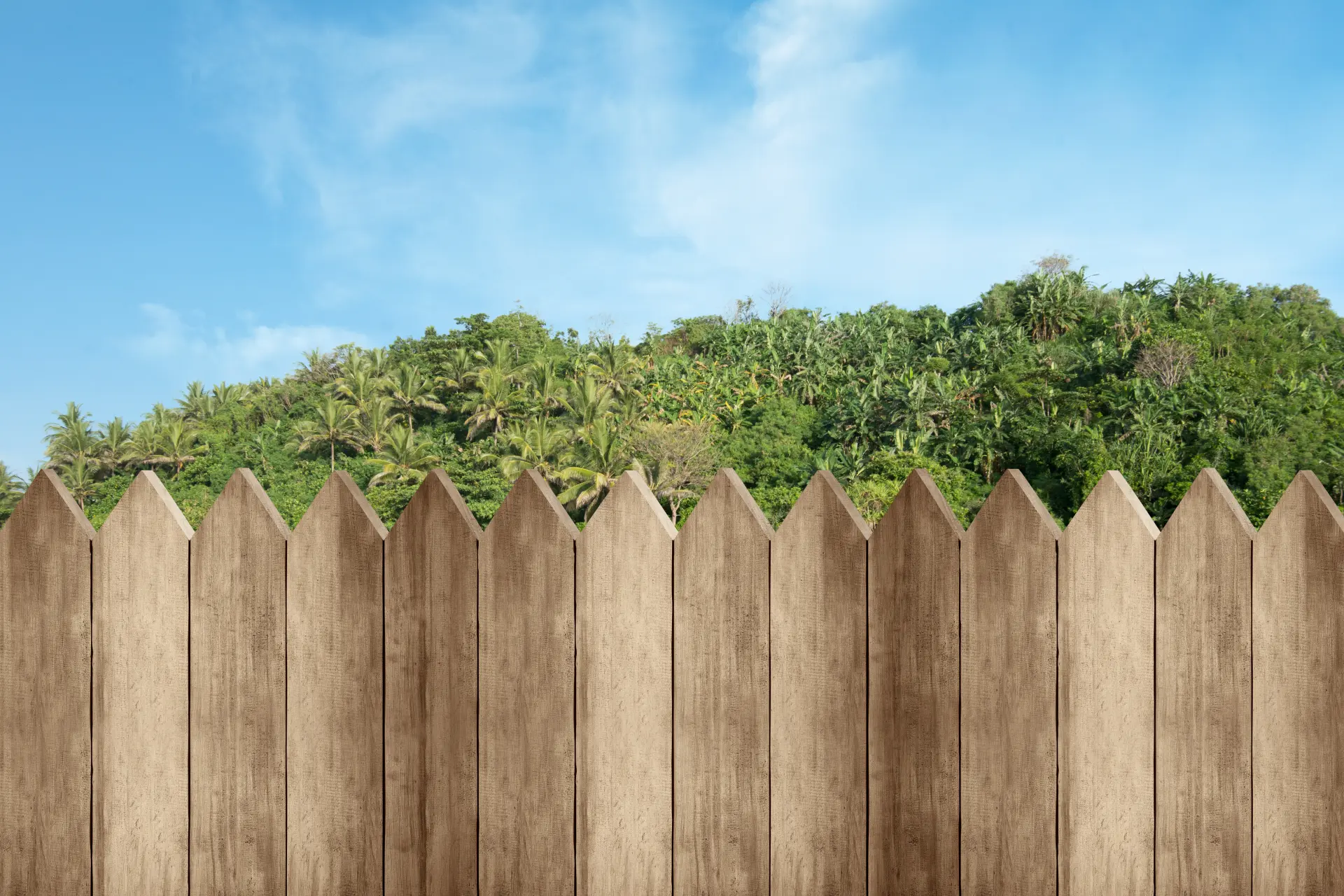
- Picket: defines an edge while retaining views.
Ask to see specifications or a sample. Look at frame joints, rail support and fixings rather than relying on an undefined “heavy duty” description. Confirm the panel thickness will suit the selected posts.
Account for Wind and Wet Conditions
Buildings, hills and gaps between houses can expose one boundary more than another. Ask an installer to assess posts, foundations and fixings together. Airflow through a panel does not, by itself, establish the wind resistance of the whole structure.
The Met Office's State of the UK Climate 2025 report, published in July 2026, says very wet October-to-March months with twice the 1961 to 1990 average rainfall occurred approximately twice as often in 2016 to 2025 as in the earlier period. This is national context, not a local rainfall measurement or fence-lifespan forecast.
Keep soil, mulch and wet leaves away from panel bottoms. Where appropriate for the selected system, gravel boards help separate panels from the ground. Avoid creating pockets where moisture remains against the timber.
Check Treatment and Ground-Contact Posts
A panel above the soil and a post buried in the ground need different specifications. Ask for written confirmation of suitability; timber colour alone does not establish the treatment it has received.
The Wood Protection Association's guidance gives examples of specifying ground-contact fence posts for Use Class 4 with desired service lives of 15, 30 or 60 years. These are specification categories, not guarantees for any treated post. Species, treatment quality and installation matter.
Follow supplier instructions for cuts and exposed end grain. For concrete or metal supports, confirm panel thickness and fixing compatibility. Read guarantee conditions alongside any required maintenance rather than assuming a headline number applies automatically.
Budget for the Finished Boundary
Compare quotes covering the same work: panels, posts, gravel boards, fixings, foundations, delivery, removal of old fencing and installation. Mention restricted access and changes in level. A cheaper panel may need different supports, so the lowest shelf price is not necessarily the lowest installed cost.
Think about future access for cleaning and coating both faces. Reduce the shortlist to two or three suitable systems, confirm their actual dimensions and total cost, and check boundary ownership and restrictions before ordering. A strong panel supported by a weak post is still a weak fence.
Summary: Choose a Complete Fence System
Balance purpose, exposure, construction and upkeep, then discuss suitable options for your Burnley garden with Tony Malpass.


