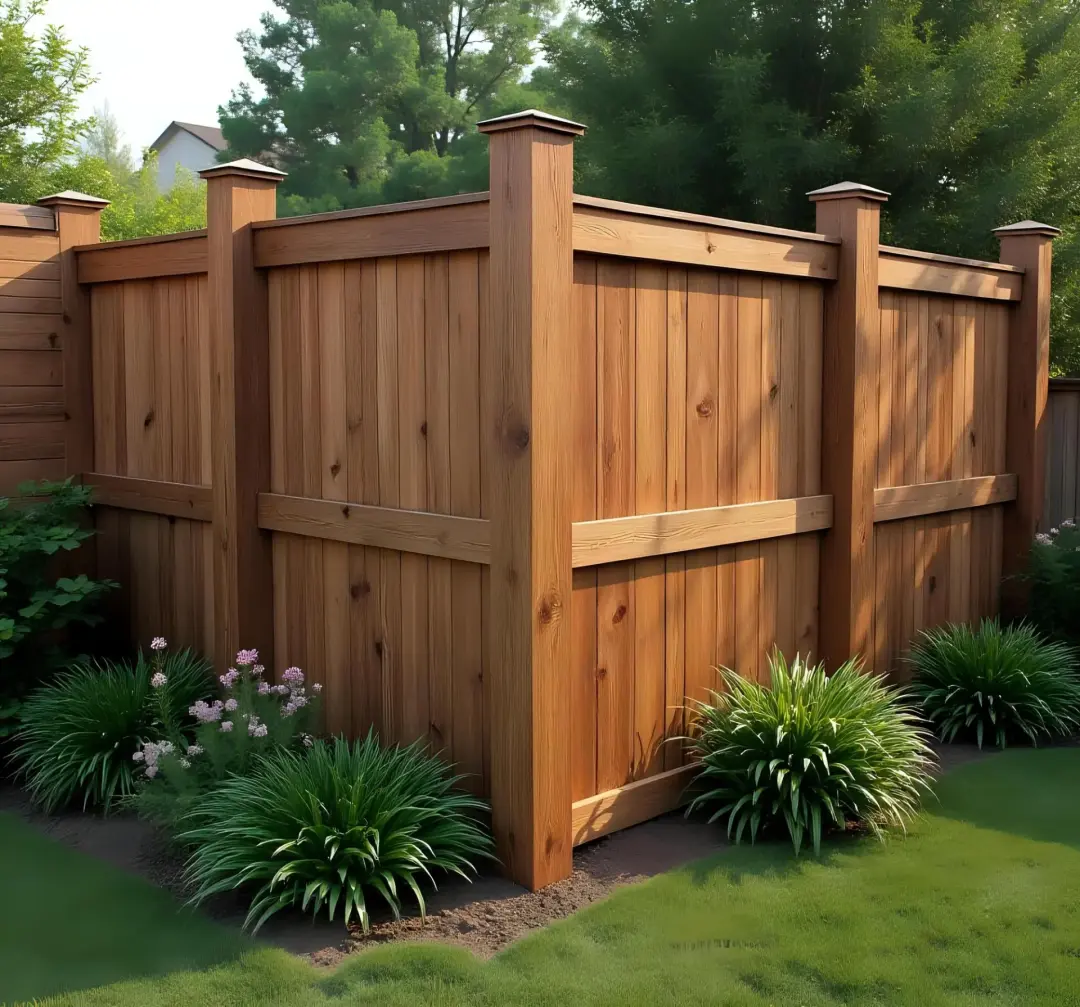
Choose an opaque fence finish for a strong colour change and a more uniform appearance. Choose a translucent stain when keeping the timber's grain visible matters more. Check the surface and existing coating first: brands use “paint”, “stain” and “fence treatment” differently, so the product specification matters more than the name.
Painting vs Staining: Compare the Appearance
An opaque finish masks much of the colour variation between boards. It can make sound replacement panels blend more closely with older timber and offers shades beyond natural wood tones. Surface texture may remain visible even when the grain's colour is hidden.
A translucent stain allows more natural variation to show. Its result depends on the starting surface: pale new wood will not predict the appearance on dark, previously treated panels. Some stains are opaque and some fence paints differ from conventional exterior gloss. Check the actual product's opacity, approved surfaces and maintenance instructions. If replacement is needed first, read how to choose the right fence panels for your garden.
When Painting Makes Sense
An opaque coating is useful when coordinating the fence with a garden room or creating a deliberate backdrop for planting. Apply a sample and let it dry before deciding, because wet colour and changing daylight can give different impressions.
Coating cannot repair a decayed rail, loose frame or split post. Complete repairs first. A film-forming finish may require removal of loose material during maintenance rather than simply adding another layer. For a Bolton garden, plan how you will reach both faces before starting, especially where sheds or dense planting restrict access.
When a Translucent Stain Works Better
A translucent finish suits sound timber whose grain you want to retain. It is less useful for hiding filler, mixed board colours or earlier patches. Test representative areas, including replacements, before buying the whole quantity.
Do not assume a translucent stain can go over an opaque coating. The old layer can prevent the intended appearance and adhesion. Check whether it must be removed and whether that preparation is practical across rough-sawn panels. Not all stains are non-film-forming, so avoid assuming they all weather or recoat in the same way.
Current Coverage and Drying Figures
Cuprinol's Ducksback information states that 5 litres cover up to 24 square metres with one coat. It gives a two to four hour drying time, shower resistance after 1 hour and up to 5 years of colour and weather protection for its specified rough-sawn applications. These figures are product-specific, not a fence-lifespan guarantee.
Ronseal Fence Life Plus lists coverage up to 6 square metres per litre and a 4-hour recoating interval. Its detailed instructions specify 2 coats for rough-sawn timber and 3 for smooth-planed timber, potentially more for weathered wood, and temperatures above 10°C. Follow the detailed directions for the surface rather than a general headline.
Coverage depends on condition and application. “Showerproof” does not mean ready for immediate recoating. Neither example establishes that paint or stain always lasts longer: formulation and preparation determine the result.
Calculate the Full Coating Quantity
Multiply panel width by height, then by the number of faces. Add posts and gates separately. Both faces of five rectangular 1.8-by-1.8-metre panels have a flat area of 32.4 square metres. At an assumed coverage of 6 square metres per litre per coat, two coats require 10.8 litres before allowing for edges, texture and losses. This is a worked example, not a coverage promise.
Slatted designs have extra internal surfaces, and rough weathered wood can absorb more coating. Compare the cost of completing every required coat, including preparation materials, rather than container prices alone.
Preparation Determines the Result
- Confirm compatibility with the timber and old finish.
- Remove dirt and loose coating using the recommended method.
- Let the surface reach the moisture condition the product requires.
- Protect paving, plants and neighbouring property, particularly when spraying.
- Apply the specified coats with the required drying intervals.
A colour coating is not automatically a replacement for preservative treatment. If preparation reveals damaged panels, compare replacement through our fencing supplies service before spending money on refinishing.
Summary: Let the Timber Guide Your Choice
Use opacity, compatibility and preparation requirements to decide; where panels are beyond a worthwhile refresh, explore replacement fencing for your Bolton garden with Tony Malpass.